AI Video from Images: How to Turn Still Photos into Dynamic Videos in 2026
Transform your photos into stunning AI videos. Complete guide to image-to-video AI tools, techniques, and workflows for creating dynamic content.
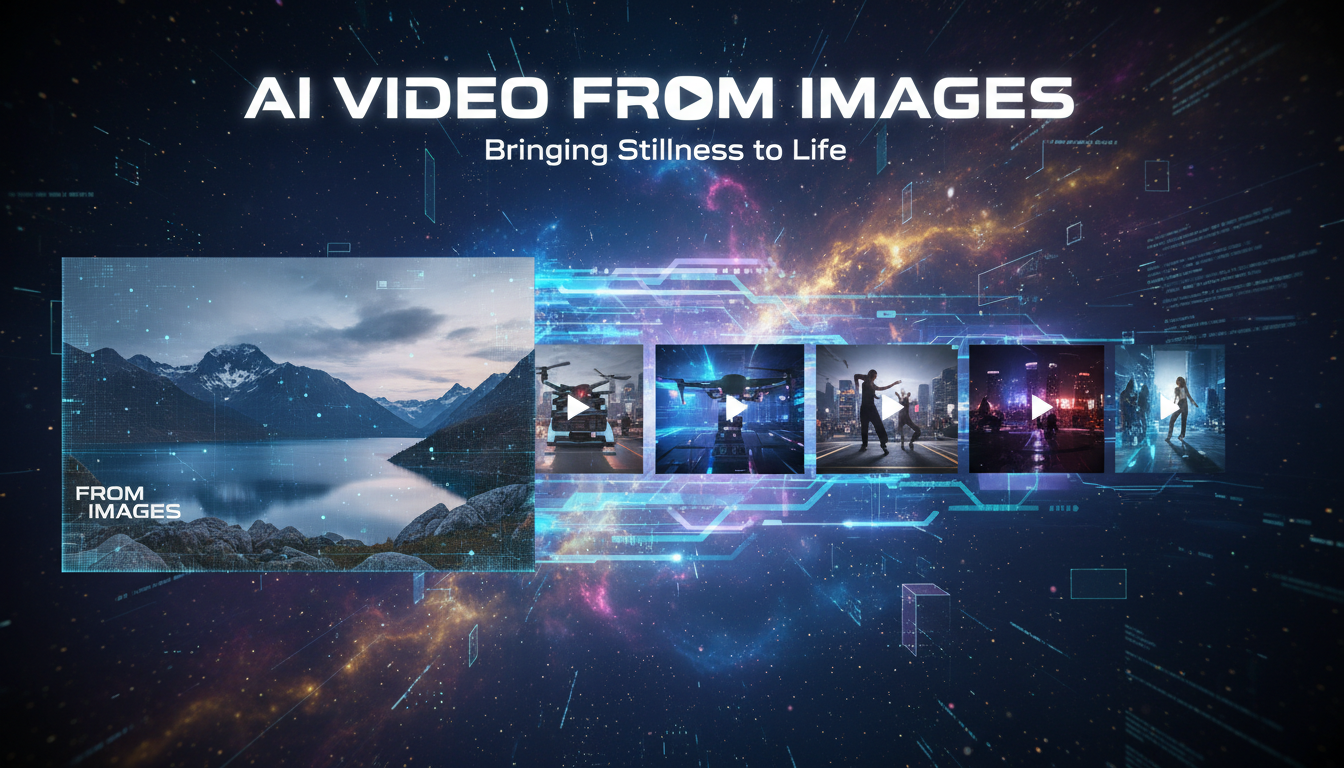
The moment I watched one of my still photographs come alive as a smooth, natural-looking video clip, I knew the game had changed. This wasn't the choppy, uncanny-valley animation of early AI. The subject moved naturally, the camera appeared to drift smoothly, and the physics of fabric and hair looked convincing. From a single JPEG.
AI video generation from images has evolved from a curiosity into a practical content creation tool. Marketers use it to create dynamic social media content from product photos. Filmmakers use it for previsualization. And regular creators use it to add motion to their portfolios without any video production experience.
Quick Answer: The best tools for creating AI video from images in 2026 are WAN 2.2 (best quality, open source), Runway Gen-3 (easiest to use), and Kling (best for character animation). You can create professional-looking video clips from any still image in under a minute. For ComfyUI workflows, Apatero makes it accessible without local GPU requirements.
- Modern AI can create 3-10 second video clips from a single image with realistic motion
- WAN 2.2 leads in quality for open-source video generation
- Results work well for social media, marketing, and creative projects
- Text prompts control the type of motion (camera movement, subject animation, etc.)
- Commercial tools are easier but expensive. Open-source alternatives are catching up fast
How Does Image-to-Video AI Work?
The technology has a simple premise with complex execution. You provide a still image and a text description of the desired motion. The AI generates a sequence of frames that starts from your image and creates natural-looking movement.
Under the hood, these models have been trained on millions of video clips. They've learned how objects move, how cameras pan, how fabric drapes, how hair flows in wind, how water ripples. When you give them a still image and say "gentle breeze blowing through the scene," they apply those learned motion patterns to your specific composition.
The result is typically 3-10 seconds of video at 24-30 frames per second. That might not sound like much, but it's more than enough for social media clips, cinemagraphs, or B-roll footage. And newer models are pushing toward longer durations.
What impressed me most when I started working with these tools was the coherence. Early models would warp and distort the image beyond recognition. Modern tools maintain the subject's identity, preserve the scene's perspective, and add motion that respects physics (most of the time). It's not perfect, but it's remarkably close.
What Are the Best AI Video Generation Tools?
I've tested every major option available in 2026. Here's my ranking based on quality, ease of use, and value.
WAN 2.2: Best Quality (Open Source)
WAN 2.2 from Alibaba is my go-to for serious work. The motion quality is the best I've tested. Camera movements feel cinematic. Character animations maintain consistency. And because it's open source, I can run it through ComfyUI with full control over every parameter.
The 14B parameter model produces stunning results, though it needs 24GB+ VRAM. The 5B model runs on more modest hardware and still produces excellent output.
I covered WAN 2.2 extensively in my complete ComfyUI guide. It's the most capable open-source option available, and the community has built impressive extensions around it.
Best for: Professional quality, full control, custom workflows Hardware: 12-24GB VRAM depending on model size Price: Free (open source)
Runway Gen-3: Easiest to Use
Runway pioneered image-to-video AI, and Gen-3 is their most polished release. The web interface is clean, the prompting is intuitive, and the results are consistently good. Not always the best quality, but reliably acceptable.
What sets Runway apart is the editing capabilities. You can extend videos, change specific elements, and composite multiple clips. It's the most complete commercial video AI suite available.
Best for: Non-technical users, quick results, easy editing Price: $12-76/month depending on plan Output: Up to 10 seconds per generation
Kling 2.0: Best for Character Animation
Kling from Kuaishou has quietly become one of the strongest contenders. The character animation quality is particularly impressive. Facial expressions look natural, body movements are fluid, and the AI handles complex actions (walking, turning, reaching) better than competitors.
Best for: Character-focused video, expressive animations Price: Free tier available, paid plans for higher quality Output: Up to 5-10 seconds
Stable Video Diffusion: Best Free Cloud Option
The open-source alternative that runs on various cloud platforms. Quality is a step below WAN 2.2, but it's more accessible and has decent community support.
Best for: Free cloud-based generation, experimentation Price: Free on various platforms Output: 2-4 seconds at current quality levels
How to Create Your First AI Video from a Photo
Let me walk you through the practical process using the most accessible approach.
Quick Method (Cloud-Based)
- Go to Runway (or Kling, Pika, or another cloud platform)
- Upload your image. Choose a photo with a clear subject and good lighting
- Write a motion prompt. Something like "slow camera dolly forward, gentle wind blowing through hair, cinematic movement"
- Set duration. Start with 4 seconds (shorter is usually higher quality)
- Generate and download. Wait 30-60 seconds for processing
Pro Method (ComfyUI + WAN 2.2)
- Set up WAN 2.2 in ComfyUI. Install the WAN nodes and download the model
- Load your image as the starting frame
- Configure your prompt for motion description
- Adjust parameters. Steps (30-50), guidance scale (7-9), motion strength
- Generate. Processing takes 2-5 minutes depending on hardware
- Post-process. Interpolate frames for smoother motion, upscale if needed
The ComfyUI method produces better results because you can fine-tune every aspect of the generation. But the cloud method gets you 80% of the quality in 10% of the time.
Tips for Better AI Videos from Images
After generating hundreds of video clips, here are the patterns I've identified.
Start with high-quality source images. The AI builds on what you give it. A sharp, well-lit, high-resolution photo produces much better video than a blurry phone snapshot. If your source photos need improvement first, you can turn them into polished AI art before animating them for even more dramatic results.
Keep motion descriptions simple. "Camera slowly pans left while subject turns head" works better than "dramatic action-packed motion with multiple camera angles." Simple, specific motion prompts produce more coherent results.
Match motion to content. A peaceful landscape should have slow, gentle motion. An action scene can have faster, more dynamic movement. The AI handles mood-appropriate motion better when your prompt aligns with the visual content.
Shorter is usually better. 3-4 second clips at higher quality beat 10-second clips that start degrading halfway through. You can always loop short clips for longer content.
Use the right aspect ratio. Generate in the format you need (16:9 for YouTube, 9:16 for TikTok/Reels, 1:1 for Instagram). Converting aspect ratios after generation crops your carefully composed scenes.
What Can You Actually Use AI Video For?
Here are the practical applications I've seen real people using successfully.
Social media content. Transform product photos into eye-catching video posts. Social media algorithms heavily favor video content, and AI lets you create it from images you already have.
E-commerce product showcases. Instead of hiring a videographer, turn your product photos into 360-degree rotation videos or lifestyle clips showing the product in use.
Real estate virtual tours. Create walkthrough-style videos from interior photos. The AI can simulate camera movement through rooms, giving viewers a sense of the space.
Personal memory enhancement. Turn old family photos into living memories. A still photo of grandparents on their wedding day becomes a brief video of them smiling and moving. It's emotionally powerful in a way I didn't expect. If the concept of bringing still images to life interests you, I have a complete guide on how to animate photos with AI that covers everything from subtle cinemagraph effects to full character animation.
Music and podcast visuals. Create dynamic background visuals from cover art or promotional images. Perfect for YouTube uploads of audio content.
I wrote about the broader AI video landscape in my guide to video generation for beginners if you want the full picture.
Common Issues and How to Fix Them
Warping and Distortion
The most common problem. The AI loses track of the image's structure and things start melting or morphing.
Fix: Lower the motion intensity/denoise strength. Use shorter clip durations. Choose simpler motion descriptions. WAN 2.2 handles this better than most alternatives.
Flickering Between Frames
Individual frames look fine but the video flickers when played back.
Fix: Increase frame count. Apply frame interpolation in post-processing. Use models specifically designed for temporal consistency (WAN 2.2 excels here).
Subject Deformation
The main subject changes shape or proportions during the video.
Fix: Use ControlNet or motion guidance to constrain the subject. Keep motion subtle. Use reference images to anchor the subject's appearance. Tools like Kiwi-Edit specialize in using reference images for precise visual control during video editing.
Poor Physics
Objects move in physically impossible ways (floating, clipping through surfaces).
Fix: Be more specific in your motion prompts about how objects should interact. Use shorter clips where physics violations are less likely to accumulate. Some manual editing in post-production may be necessary.
Free Options for AI Video Creation
You can create AI videos without spending anything.
WAN 2.2 locally: Free if you have compatible hardware (12GB+ VRAM recommended) Kling free tier: Limited generations but good quality Stable Video Diffusion: Available on various free platforms Google Colab notebooks: Run models for free on Google's cloud GPUs Pika free tier: Limited but accessible
For users without powerful hardware, Apatero provides cloud access to WAN 2.2 and other video models without local GPU requirements.
Frequently Asked Questions
Can AI turn any photo into a video?
Most photos work, but images with clear subjects, good lighting, and minimal clutter produce the best results. Abstract or heavily processed images sometimes confuse the motion prediction.
How long can AI-generated videos be?
Current tools typically generate 3-10 second clips. Longer videos can be created by chaining multiple clips together or using specialized long-form models. WAN 2.2 can produce up to 81 frames (about 3 seconds at 24fps) in a single generation.
Is the quality good enough for professional use?
For social media and web content, absolutely. For broadcast or cinema, it's getting close but still shows artifacts under scrutiny. Most viewers can't distinguish well-made AI video from traditionally produced B-roll.
Do I need a powerful computer?
For cloud-based tools, no. A web browser is sufficient. For local generation, you need an NVIDIA GPU with 12GB+ VRAM for good results.
Can AI create videos from multiple images?
Yes. Several models support first-frame and last-frame inputs, generating motion that transitions between two images. This is useful for creating smooth transitions or showing a transformation over time.
How do I add sound to AI-generated videos?
AI video tools generate silent clips. Add music, sound effects, or voiceover using any video editor (DaVinci Resolve is free and excellent). Some newer tools are starting to integrate audio generation, but it's still early.
Is AI video generation ethical?
The technology itself is neutral. Creating deepfakes or misleading content is problematic. Using it for creative projects, marketing, and entertainment is generally accepted. Be transparent about AI-generated content when disclosure is appropriate.
What's the best format for source images?
High-resolution JPEG or PNG at 1280x720 or higher. The aspect ratio should match your target video format. Clean, well-lit images with distinct subjects produce the most consistent results.
Where This Technology Is Heading
The progress in AI video from images has been staggering. A year ago, 2-second clips with visible artifacts were impressive. Today, we're getting 10-second clips with realistic motion and minimal distortion.
I expect real-time video generation from images within the next year. Interactive video creation where you can direct the motion as it generates. And much longer clips without quality degradation.
The creative potential is enormous. Every photographer's portfolio becomes a video library. Every product photo becomes a commercial. Every memory becomes a living moment. We're just scratching the surface of what's possible.
Render the video you just read about
Kling, Veo, Seedance and more, in your browser, no queue to build. Check your welcome allowance and the displayed cost before generating.
Related Articles
AI Art Market Statistics 2025: Industry Size, Trends, and Growth Projections
Comprehensive AI art market statistics including market size, creator earnings, platform data, and growth projections with 75+ data points.
AI Automation Tools: Transform Your Business Workflows in 2025
Discover the best AI automation tools to transform your business workflows. Learn how to automate repetitive tasks, improve efficiency, and scale operations with AI.
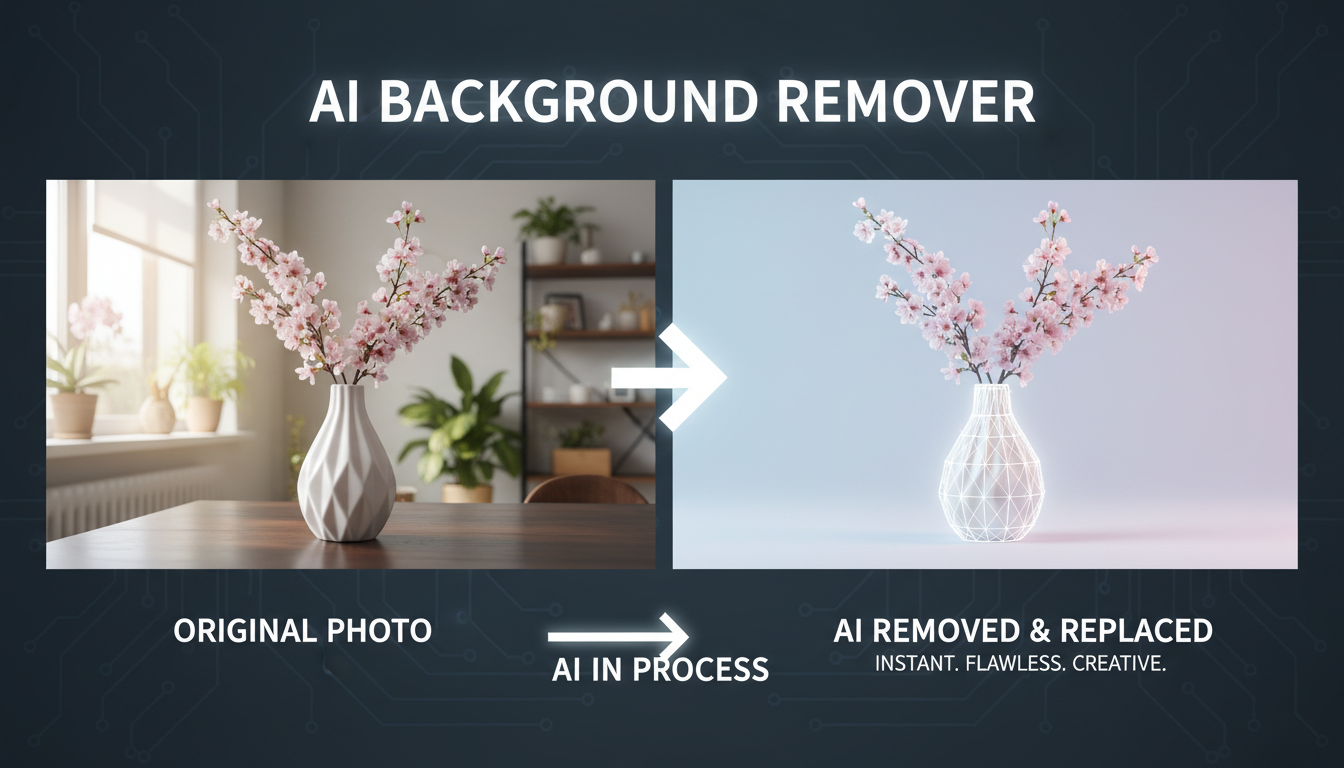
AI Background Remover and Generator: The Complete Guide to Replacing, Creating, and Perfecting Image Backgrounds
Master AI background removal, replacement, and generation. Compare the best tools, learn proven techniques, and transform your product photos and portraits.