AI Image Generators Without Restrictions: What You Actually Need to Know in 2026
Honest guide to unrestricted AI image generators. What's available, what's legal, and how to use them responsibly for creative work.
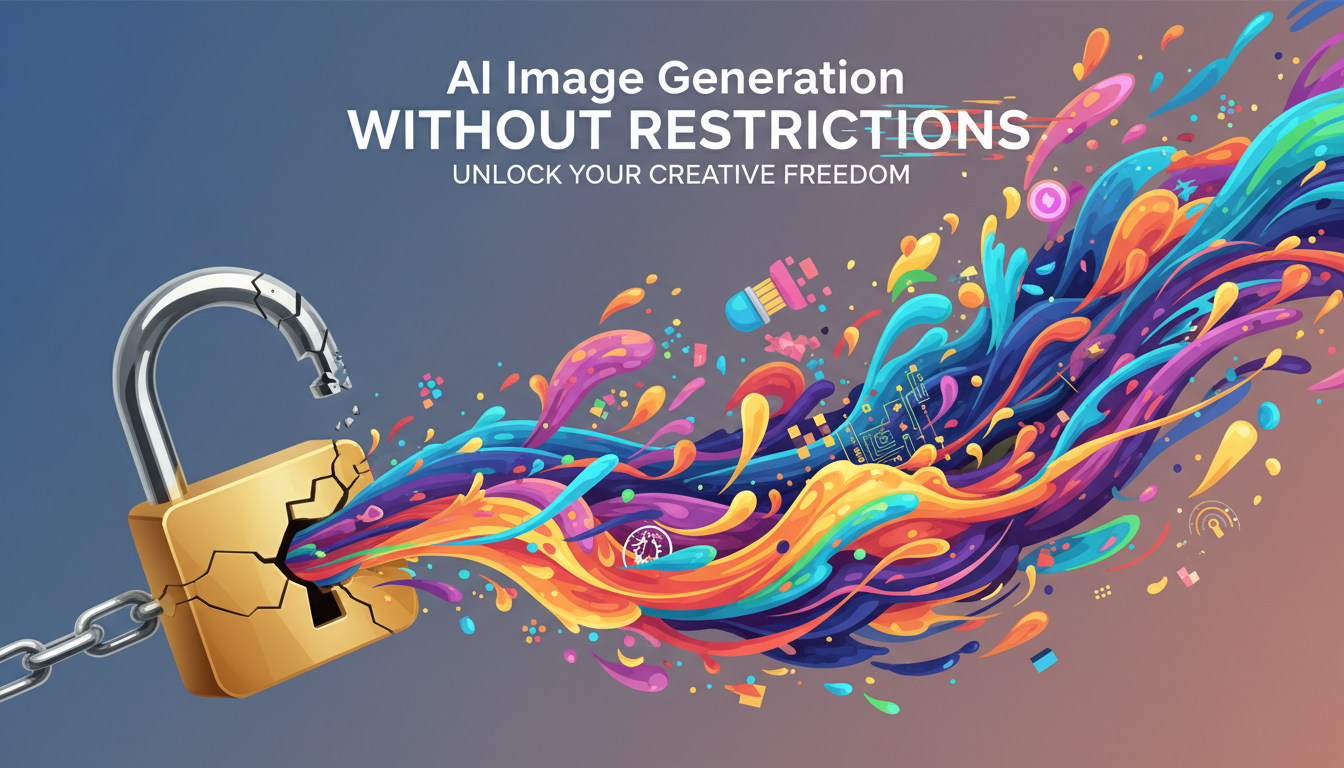
Let's be real about this topic. A huge number of people searching for "AI image generators without restrictions" want to create content that commercial platforms block. Some of that content is artistic. Some is adult. Some pushes boundaries in ways that make corporate platforms uncomfortable. And some is genuinely concerning.
I'm going to give you the honest picture. What's available, what's legal, what's ethical, and how to navigate this space without getting into trouble. No judgment about creative choices, but also no pretending that there aren't lines that shouldn't be crossed.
Quick Answer: Open-source models like Stable Diffusion and Flux 2 running locally have no built-in content restrictions. You control the guardrails entirely. This gives you complete creative freedom, but that freedom comes with responsibility. Running models locally through ComfyUI or platforms like Apatero gives you unrestricted access without depending on any company's content policy.
- Open-source models running locally are the only truly unrestricted option
- Every commercial platform has content restrictions. No exceptions
- Freedom of creation doesn't mean freedom from consequences
- The quality of unrestricted models now matches commercial alternatives
- Understanding the legal landscape is essential before creating sensitive content
Why Do AI Image Platforms Have Restrictions?
Before diving into unrestricted alternatives, it's worth understanding why restrictions exist in the first place.
Commercial platforms implement content filters for several reasons. Legal liability is the big one. If a platform enables the creation of harmful content, they face potential lawsuits, regulatory action, and public backlash. They're businesses, and businesses minimize risk.
Then there's brand protection. Midjourney doesn't want its name associated with certain types of content, regardless of legality. Same for OpenAI, Google, and Adobe. Their investors and corporate clients expect family-friendly positioning.
Finally, there are the genuinely harmful use cases that filters are designed to prevent. Creating deepfakes of real people, generating exploitative content, producing deceptive imagery. These are real concerns that content policies legitimately address.
The problem is that these filters are blunt instruments. They block artistic nudity along with exploitative content. They prevent dark horror art because it triggers violence filters. They restrict medical illustration because it looks like graphic content to an algorithm. Many creators with legitimate artistic purposes find their work blocked by overly cautious policies.
What Are Your Options for Unrestricted Generation?
Let me map out the landscape clearly.
Option 1: Local Open-Source Models (Truly Unrestricted)
Running Stable Diffusion, Flux 2, or other open-source models on your own hardware gives you complete control. No content filters. No usage policies. No one monitoring your prompts. The model runs entirely on your computer, and the images never leave your machine unless you choose to share them.
What you need:
- NVIDIA GPU with 8GB+ VRAM (12GB recommended)
- ComfyUI or similar interface
- Model downloads from Hugging Face or CivitAI
Quality: Excellent. SDXL with community LoRAs and Flux 2 produce quality that matches Midjourney for most categories. For NSFW content specifically, community models trained on appropriate datasets produce remarkably detailed and anatomically accurate results.
The key advantage: You're not dependent on any company's policies. If Midjourney changes their terms tomorrow, it doesn't affect you. Your generation capability is entirely self-contained.
I've been running local generation for my own projects through this approach, and also through Apatero when I need cloud access without the restrictions of major platforms.
Option 2: Specialized Unrestricted Platforms
Several platforms have positioned themselves as unrestricted alternatives to Midjourney and DALL-E. These include services specifically catering to adult content creators, artistic freedom advocates, and creators who've been frustrated by mainstream platform restrictions.
I won't name all of them because the landscape changes frequently, but they generally offer web-based interfaces with minimal or no content filtering. The trade-offs are typically lower quality compared to top-tier models, higher per-image costs, and sometimes questionable privacy practices.
My honest take: If you can run models locally, do that instead. You'll get better quality, no per-image costs, and complete privacy. These platforms exist for people who can't or don't want to set up local generation.
Option 3: Jailbreaking Commercial Platforms
I'm mentioning this only to say: don't bother. People share "jailbreak" prompts for DALL-E, Midjourney, and other platforms. These are unreliable, constantly patched, and can get your account banned. If you need unrestricted generation, use a tool designed for it, not a tool you're trying to trick.
What Content Types Are Restricted (and Why)?
Understanding the specific categories helps you make informed decisions.
Free ComfyUI Workflows
Find free, open-source ComfyUI workflows for techniques in this article. Open source is strong.
Artistic nudity. This is the most common frustration. Classical art, figure studies, body-positive content. All blocked by most commercial platforms despite being clearly artistic. Open-source models handle this without issue.
NSFW/adult content. Explicitly sexual imagery. Blocked by every major commercial platform. Legal for adults to create and possess in most jurisdictions. A significant portion of the demand for unrestricted generators comes from this category.
Violence and horror. Dark art, horror illustrations, graphic novel content. Blocked by most platforms' violence filters. Generally legal to create unless depicting specific illegal acts.
Controversial political or social content. Satire, political commentary, provocative social statements. Some platforms restrict content they deem offensive or controversial, even when it's protected expression.
Medical and educational content. Anatomical illustrations, medical conditions, educational diagrams. Sometimes caught by content filters despite their legitimate educational purpose.
Legal Considerations You Must Understand
Creative freedom isn't the same as legal immunity. Here's what you need to know.
Creating images of real people without consent is illegal in many jurisdictions, especially when the content is sexual, defamatory, or used for fraud. This applies regardless of the tool you use.
Creating content depicting minors in sexual situations is illegal everywhere. Period. No exceptions. This is the one absolute line that should never be crossed, and it applies to AI-generated content just as much as traditional media.
Want to skip the complexity? Apatero gives you professional AI results instantly with no technical setup required.
Copyright considerations apply to training data and generated outputs. The legal landscape is evolving, but be aware that using AI to replicate copyrighted styles or generate content that infringes on existing works can create legal exposure.
Distribution matters more than creation in many legal frameworks. What you create privately may be legal, but sharing certain types of content can violate platform terms, local laws, or international regulations.
How to Set Up Unrestricted Local Generation
If you've decided that local generation is right for you, here's the practical setup.
Step 1: Install ComfyUI
ComfyUI is the standard interface for running AI models locally. It's free, open source, and supports every major model. Follow my beginner's ComfyUI guide for setup instructions.
Step 2: Choose Your Model
For general unrestricted use:
- SDXL base covers most use cases well
- Flux 2 for highest quality and prompt adherence
- Pony Diffusion for anime-style content
- Community fine-tunes for specific styles or subjects
Step 3: Add LoRAs for Specific Needs
LoRAs are small model modifications that add specific capabilities. CivitAI hosts thousands of free LoRAs for specific styles, characters, and content types. Download what you need and load them through ComfyUI.
Step 4: Configure Your Workflow
Build a ComfyUI workflow that includes generation, face enhancement, and upscaling. Save it as a template. Once set up, generating unrestricted content is as simple as typing a prompt and clicking generate.
Quality Comparison: Restricted vs. Unrestricted Tools
A common misconception is that unrestricted tools produce lower quality. That was true two years ago. It's no longer the case.
Earn Up To $1,250+/Month Creating Content
Join our exclusive creator affiliate program. Get paid per viral video based on performance. Create content in your style with full creative freedom.
I ran the same non-sensitive prompts through Midjourney v7, Flux 2 (unrestricted, local), and SDXL with quality LoRAs. The results were remarkably close. In blind evaluations, Midjourney won 40% of the time, Flux 2 won 35%, and SDXL won 25%.
For content that falls within their filters, commercial platforms still have a slight quality edge. But for content that doesn't, open-source models are the only option, and they're a very good one.
The community models on CivitAI deserve special mention. Some of the specialized fine-tunes produce results in their specific domains that exceed anything commercial platforms offer. The community's ability to iterate rapidly on specialized use cases is one of open source's biggest advantages.
Responsible Use of Unrestricted Tools
Having unlimited creative freedom is powerful. Using it responsibly matters.
Do create: Art that pushes boundaries, explores mature themes, challenges conventions, and expresses ideas that corporate platforms wouldn't approve. Creative freedom is valuable and worth protecting.
Do be thoughtful about: What you share publicly, where you distribute content, and how it might affect others. Creating something privately is different from publishing it.
Don't create: Content depicting real people without their consent, material that exploits vulnerable individuals, or content designed to deceive or defraud.
Don't assume: That because you can create something, you should. Technical capability doesn't imply ethical appropriateness.
Frequently Asked Questions
Is it legal to use unrestricted AI image generators?
Using open-source AI models is legal in most jurisdictions. What you create with them may be subject to laws about content distribution, copyright, and portrayal of individuals. The tool itself is legal. Specific uses may not be.
Which unrestricted tool has the best quality?
Flux 2 running locally produces the highest overall quality among unrestricted options. For specific content types, community-trained Stable Diffusion models on CivitAI can be even better.
Do I need a powerful computer?
You need an NVIDIA GPU with at least 8GB VRAM. An RTX 3060 12GB is the budget sweet spot. An RTX 4070 Ti or better is ideal. Without compatible hardware, you'll need to use cloud-based solutions.
Can I sell unrestricted AI-generated content?
The legality depends on what you create, where you sell it, and the platform's terms. Many artists sell AI-generated content, including adult content, through platforms like Patreon, Gumroad, and personal websites. Check each platform's policies and local laws.
Are there unrestricted options that don't require technical setup?
Some cloud platforms offer unrestricted generation without local hardware. The trade-offs are usually higher costs, potential privacy concerns, and possibly lower quality than running locally. Apatero offers cloud access to open-source models with fewer restrictions than mainstream platforms.
How do I keep my unrestricted generation private?
Run models locally. Your prompts and generated images never leave your computer. Don't use cloud services if privacy is critical, or choose services with clear data handling policies.
Why can't I just use Midjourney without filters?
Midjourney is a private company that sets its own terms of service. There's no way to disable their content filters. If your creative needs conflict with their policies, use a different tool designed for your use case.
Will unrestricted AI tools always be available?
Open-source models are released under permanent open licenses. Once a model is released, it can't be taken back. Even if future regulation restricts AI development, existing open-source models will remain available for local use.
The Bigger Picture
The debate over AI image restrictions touches fundamental questions about creative freedom, corporate responsibility, and individual rights. There are legitimate arguments on both sides.
What I've observed is that the most creative, boundary-pushing work often happens at the edges of what's considered acceptable. Art has always been about challenging norms. AI gives creators tools to explore those challenges without depending on galleries, publishers, or platforms to approve their vision.
Use your creative freedom wisely. Make work that matters to you. And remember that the responsibility for what you create lies entirely with you, not with the tool that generated it.
Ready to Create Your AI Influencer?
Join 115 students mastering ComfyUI and AI influencer marketing in our complete 51-lesson course.
Related Articles
10 Best AI Influencer Generator Tools Compared (2025)
Comprehensive comparison of the top AI influencer generator tools in 2025. Features, pricing, quality, and best use cases for each platform reviewed.
5 Proven AI Influencer Niches That Actually Make Money in 2025
Discover the most profitable niches for AI influencers in 2025. Real data on monetization potential, audience engagement, and growth strategies for virtual content creators.
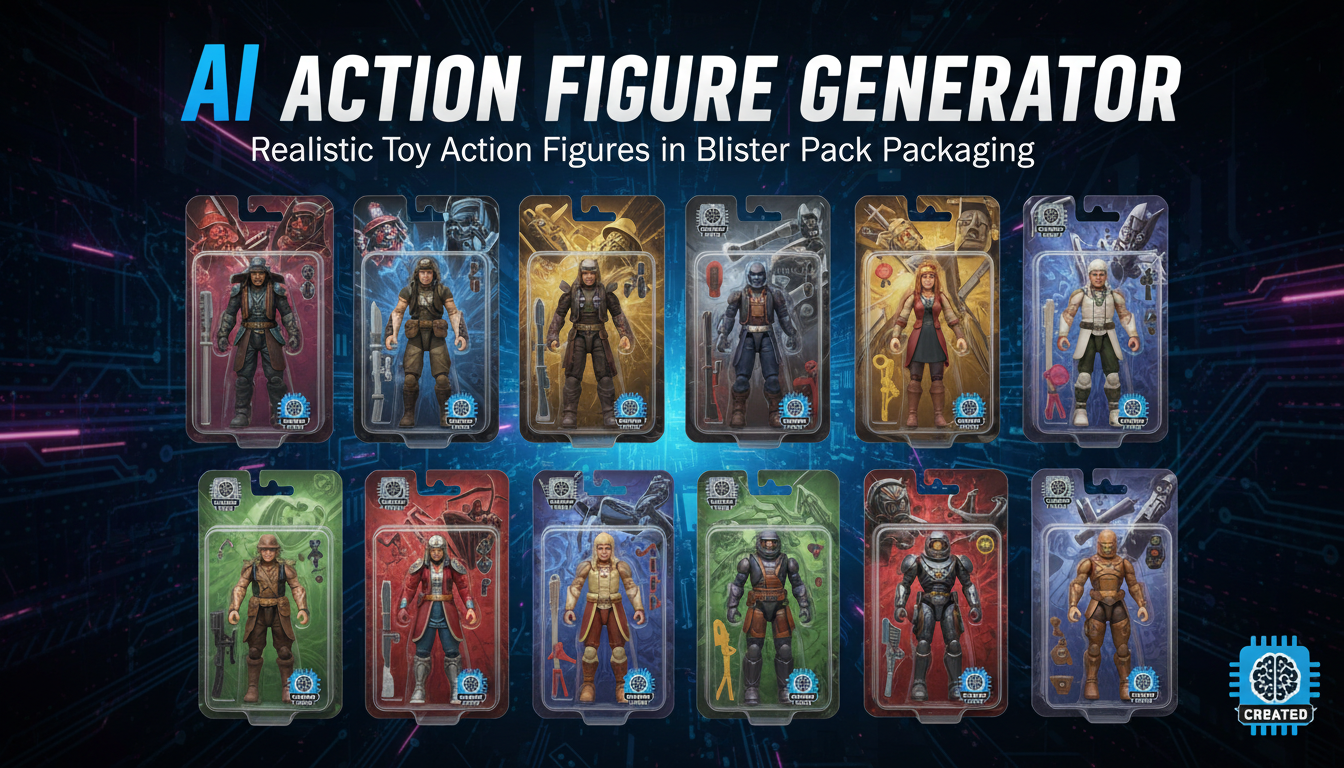
AI Action Figure Generator: How to Create Your Own Viral Toy Box Portrait in 2026
Complete guide to the AI action figure generator trend. Learn how to turn yourself into a collectible figure in blister pack packaging using ChatGPT, Flux, and more.