WAN AI Server Costs: Running on RunPod Complete Cost Analysis 2025
Detailed cost breakdown for running WAN 2.2 on RunPod cloud GPUs. GPU options, pricing tiers, optimization strategies, cost comparison vs local setup.
Quick Answer: Running WAN 2.2 on RunPod costs $0.30-1.00 per hour depending on GPU tier (RTX 4090 $0.69/hr, A6000 $0.89/hr). Generating 10-second video takes 8-15 minutes, costing $0.10-0.25 per video. Monthly Wan 2.2 RunPod costs for 100 videos range from $10-25, significantly cheaper than managed services like Runway ML ($120+/month) but more expensive than local generation after hardware payback period.
Understanding Wan 2.2 RunPod costs helps you make informed decisions about cloud versus local generation. This comprehensive Wan 2.2 RunPod costs analysis breaks down every factor affecting your budget.
- GPU pricing: $0.30-1.00/hour depending on model
- Per-video cost: $0.10-0.25 for 10-second clips
- Monthly (100 videos): $10-25 with optimization
- vs Runway ML: 75-80% cheaper at high volume
- vs Local setup: More expensive after 12-18 months
- Best for: Testing, burst workloads, avoiding hardware investment
I was staring at GPU prices. RTX 4090: $1,600. My bank account: definitely not $1,600. But I had a client project that needed WAN 2.2 video generation. Found RunPod, saw "$0.69/hour" and thought "that's cheap, I'll just use this."
Generated 20 test videos at about 12 minutes each. My first bill: $3. Perfect. Then I got busy with the real project, left the instance running overnight by accident. Woke up to a $23 bill for 32 hours of idle GPU time.
Learned real fast that RunPod is amazing if you remember to shut down your instances. Expensive if you don't. Now I set 2-hour auto-shutdown timers on everything.
:::tip[Key Takeaways]
- WAN AI Server Costs: Running on RunPod Complete Cost Analysis 2025 represents an important development in its field
- Multiple approaches exist depending on your goals
- Staying informed helps you make better decisions
- Hands-on experience is the best way to learn :::
- Detailed RunPod pricing breakdown by GPU tier
- Real-world cost examples for various generation volumes
- Hidden costs and optimization strategies
- Local vs cloud break-even analysis
- Best practices for minimizing RunPod expenses
- Alternative cloud GPU providers comparison
What Are RunPod's GPU Options and Pricing?
RunPod offers multiple GPU tiers suitable for WAN 2.2 video generation. Understanding these options is essential for optimizing your Wan 2.2 RunPod costs based on your specific workflow needs.
For users new to ComfyUI, our essential nodes guide covers the fundamentals you'll need to run efficient workflows that minimize Wan 2.2 RunPod costs.
GPU Tier Comparison
| GPU Model | VRAM | Hourly Rate | WAN 2.2 Performance | Best For |
|---|---|---|---|---|
| RTX 4090 | 24GB | $0.69/hr | Excellent (10min/video) | Balanced cost/performance |
| RTX A6000 | 48GB | $0.89/hr | Excellent (8min/video) | Large batch processing |
| RTX 3090 | 24GB | $0.44/hr | Good (15min/video) | Budget option |
| A40 | 48GB | $0.79/hr | Very Good (10min/video) | Professional reliability |
| RTX 6000 Ada | 48GB | $1.29/hr | Excellent (7min/video) | Maximum performance |
Pricing Notes:
- Rates vary by availability and data center
- Secure cloud instances cost 10-20% more
- Community cloud cheaper but less reliable
- Spot instances can save 50% but risk interruption
WAN 2.2 Minimum Requirements
For 720p Generation:
- Minimum: 12GB VRAM (RTX 3090, 4090)
- Recommended: 16GB+ VRAM
- Model: WAN 2.2 5B or 14B
For 1080p Generation:
- Minimum: 16GB VRAM
- Recommended: 24GB+ VRAM
- Model: WAN 2.2 14B models
Storage Requirements:
- ComfyUI installation: 15GB
- WAN 2.2 models: 25-50GB depending on variant
- Working space: 20GB minimum
- Total: 60-85GB storage
RunPod charges $0.10/GB/month for persistent storage. Initial setup requires 60-85GB = $6-8.50/month storage fee.
Real-World Cost Examples
Understanding Wan 2.2 RunPod costs requires realistic usage scenarios. These examples illustrate actual Wan 2.2 RunPod costs across different usage patterns.
Scenario 1: Casual Creator (10 Videos/Month)
Usage Pattern:
- 10 videos, 10 seconds each
- RTX 4090 GPU ($0.69/hr)
- 12 minutes generation time per video
- Total compute: 2 hours/month
Cost Breakdown:
- Compute time: 2 hours × $0.69 = $1.38
- Storage (60GB): $6.00/month
- Total: $7.38/month
Comparison:
- Runway ML Basic: $12/month (limited generations)
- Local RTX 4090: $1,600 upfront, $2/month electricity
- RunPod Winner: For casual use, cheapest option
Scenario 2: Content Creator (100 Videos/Month)
Usage Pattern:
- 100 videos, 10 seconds each
- RTX 4090 GPU
- 12 minutes per video average
- Total compute: 20 hours/month
Cost Breakdown:
- Compute: 20 hours × $0.69 = $13.80
- Storage: $6.00/month
- Total: $19.80/month
Comparison:
- Runway ML Standard: $76/month
- Kling AI Professional: $120/month
- Local RTX 4090: $133/month (amortized over 12 months)
- RunPod Winner: Until month 12, then local becomes cheaper
Scenario 3: Professional Studio (500 Videos/Month)
Usage Pattern:
- 500 videos monthly
- Mix of RTX 4090 and A6000
- Average 11 minutes per video
- Total compute: 92 hours/month
Cost Breakdown:
- Compute: 92 hours × $0.69 = $63.48
- Storage (100GB): $10.00/month
- Total: $73.48/month
Comparison:
- Multiple Runway subscriptions: $200+/month
- Local RTX 4090: $133/month (first year), $2/month thereafter
- Local Winner: For high volume, local setup pays off quickly
Scenario 4: Burst Project (1000 Videos in One Week)
Usage Pattern:
- 1000 videos needed quickly
- Rent 5× RTX 4090 simultaneously
- Complete in 40 hours total (8 hours per GPU)
Cost Breakdown:
- Compute: 40 hours × $0.69 × 5 GPUs = $138
- Storage (one week): $0.15
- Total: $138.15
Comparison:
- Local: Impossible without 5 GPUs ($8,000 investment)
- Runway: ~$200 + overage fees
- RunPod Winner: For burst workloads, cloud flexibility invaluable
Hidden Costs and Optimization Strategies
Published hourly rates don't tell the complete story of Wan 2.2 RunPod costs. Understanding hidden factors helps you optimize your actual Wan 2.2 RunPod costs.
Hidden Cost Factors
Idle Time: RunPod charges while instance runs, even during non-generation periods (workflow setup, troubleshooting, model loading).
Strategy: Terminate instances when not actively generating. Restart when needed. Adds 2-3 minutes startup but eliminates idle charges.
Data Transfer:
- Download: Free
- Upload: Free (within limits)
- Large model uploads can be slow
Strategy: Use RunPod's built-in model library or S3 pre-loaded templates to avoid repeated uploads.
Storage Accumulation: Output videos accumulate in storage. 100 videos = 5-10GB depending on settings.
Strategy: Download outputs regularly and delete from RunPod storage. Only keep working files.
Template Setup Time: First-time ComfyUI + WAN 2.2 setup takes 30-60 minutes of paid GPU time.
Strategy: Use community templates with pre-installed ComfyUI and WAN 2.2. Skip straight to generation.
Cost Optimization Techniques
Use Spot Instances: 50% cheaper than on-demand but can be interrupted. Fine for experimentation, risky for production.
Batch Processing: Generate multiple videos per session. Setup time (5-10 min) amortized across all videos.
Lower Resolution Testing: Test prompts at 512px, only generate finals at 720p/1080p. Saves 60-70% cost during iteration.
Model Selection: WAN 2.2 5B generates nearly as good as 14B for many use cases but 30% faster = 30% cheaper.
Off-Peak Timing: Some GPU tiers show price variance by demand. Check rates at different times if flexible.
Persistent Storage Cleanup: Delete old workflows, temporary files, cached models. Every GB saved = $0.10/month.
Local vs RunPod Break-Even Analysis
When does local hardware investment make financial sense compared to Wan 2.2 RunPod costs? This break-even analysis helps you decide based on your volume.
Cost Comparison Over Time
Local Setup (RTX 4090):
- Initial cost: $1,800 (GPU) + $400 (system) = $2,200
- Monthly cost: $5 electricity + $2 maintenance = $7
- Year 1 total: $2,284
- Year 2 total: $2,368 ($84 ongoing)
- Year 3 total: $2,452
RunPod (100 Videos/Month):
- Monthly cost: $20 (compute + storage)
- Year 1 total: $240
- Year 2 total: $480
- Year 3 total: $720
Break-Even Point: Month 11-12 at 100 videos/month
Volume Impact on Break-Even:
| Monthly Videos | RunPod Monthly Cost | Break-Even Month |
|---|---|---|
| 25 videos | $8 | Never (RunPod always cheaper) |
| 50 videos | $12 | Month 16 |
| 100 videos | $20 | Month 12 |
| 200 videos | $38 | Month 7 |
| 500 videos | $75 | Month 4 |
Conclusion: Higher volume = faster payback for local hardware. Under 50 videos/month, RunPod remains cost-effective indefinitely.
Flexibility Value
RunPod Advantages:
- Scale up/down instantly
- Access to multiple GPU types
- No maintenance or upgrades
- Geographic flexibility
- Zero commitment
Local Advantages:
- Unlimited generation after payback
- No network latency
- Complete privacy
- Customization freedom
- Long-term cheapest option
Hybrid Approach: Many professionals use local for routine work, RunPod for burst needs or travel. Best of both worlds.
Alternative Cloud GPU Providers
RunPod isn't the only option for cloud WAN 2.2 generation.
Vast.ai
Pricing: $0.20-0.80/hr depending on GPU Pros: Often cheaper, large GPU selection Cons: More technical setup, less reliable, community marketplace model
Best For: Advanced users comfortable troubleshooting, absolute lowest cost priority.
Paperspace
Pricing: $0.51-0.76/hr for suitable GPUs Pros: Excellent UI, reliable infrastructure, good documentation Cons: Limited GPU availability, higher prices than RunPod
Best For: Users prioritizing ease of use over absolute lowest cost.
Lambda Labs
Pricing: $0.50-1.10/hr Pros: Simple setup, reliable, good performance Cons: Often sold out, limited locations
Best For: Users who value reliability and need assured availability.
Managed Platforms (Apatero.com)
Pricing: $0.50-2.00 per video (usage-based) Pros: Zero setup, optimized workflows, reliable results, no GPU management Cons: Higher per-video cost than raw GPU rental
Best For: Users wanting results without infrastructure management or technical knowledge.
Best Practices for RunPod WAN 2.2 Workflows
Maximizing efficiency reduces costs and frustration.
Template Setup
Recommendation: Use pre-configured RunPod templates with ComfyUI + WAN 2.2 already installed.
DIY Setup (First Time):
- Launch RTX 4090 instance
- Install ComfyUI via git
- Install WAN 2.2 custom nodes
- Download models (25-50GB, takes time)
- Configure workflows
- Total time: 45-90 minutes = $0.50-1.00 cost
Template Approach:
- Launch instance with pre-configured template
- Verify models loaded
- Start generating
- Total time: 3-5 minutes = $0.04-0.06 cost
Save Your Setup: Create custom template after first setup. Future launches use your configuration instantly.
Efficient Workflow Design
Batch Queueing: Queue 10-20 prompts at once. ComfyUI processes sequentially without manual intervention. You pay for GPU time regardless of whether you're watching, so batch processing maximizes value.
Prompt Validation: Test prompts locally or on cheaper GPU before final generation on expensive tier. Avoid costly trial-and-error on high-end GPUs.
Workflow Optimization: Optimize ComfyUI workflows for speed. Faster generation = lower cost per video. Review our WAN 2.2 optimization guide for techniques.
Cost Monitoring
Track Usage: RunPod provides usage dashboard. Monitor costs daily when starting to calibrate expectations.
Set Alerts: Configure email alerts at spending thresholds ($10, $25, $50). Prevents surprise bills from accidentally leaving instances running.
Terminate Instances: Always terminate when finished. Paused instances still incur some charges. Full termination eliminates all compute costs.
When Should You Choose Each Option?
Choose RunPod When:
- Generating under 100 videos/month
- Testing WAN 2.2 before hardware investment
- Need burst capacity for specific projects
- Want access to multiple GPU types
- Traveling without powerful laptop
- Avoiding $2,000+ upfront hardware cost
Choose Local Setup When:
- Generating 100+ videos/month consistently
- Privacy critical (sensitive content)
- Want unlimited experimentation
- Have technical skills for setup/maintenance
- Can afford upfront investment
- Long-term video generation plans
Choose Managed Platforms (Apatero.com) When:
- Want zero technical complexity
- Need reliable, consistent results
- Prefer usage-based pricing
- Value time more than absolute lowest cost
- Focus on creative work, not infrastructure
Check our complete PC requirements guide for local hardware recommendations, and WAN 2.2 setup guide for comprehensive installation instructions.
Recommended Next Steps:
- Estimate your realistic monthly video generation volume
- Calculate costs for RunPod at that volume
- Compare to local hardware amortized cost
- Test RunPod with free credit or small initial budget
- Make informed decision based on actual usage patterns
Additional Resources:
- RunPod Official Documentation
- WAN 2.2 Complete Guide
- Local AI Hardware Guide
- Cloud GPU Comparison Tools
- Use RunPod if: Under 100 videos/month, testing workflows, burst needs, avoiding upfront cost
- Go local if: High volume (100+ monthly), long-term commitment, privacy critical, have technical skills
- Use Apatero.com if: Want professional results without setup, prefer simple usage-based pricing, value convenience
RunPod provides excellent middle-ground between expensive managed services and large local hardware investment. For many creators, it's the optimal solution - professional GPU access without commitment or complexity. Understanding the true costs including hidden factors enables smart decisions that maximize value while minimizing waste.
The cloud GPU market continues evolving with more providers and better pricing. What costs $0.69/hour today may cost less tomorrow. But the fundamental calculation remains: Compare your real usage needs against upfront local costs vs ongoing cloud costs to make the economically rational choice for your specific situation.
Optimizing Your RunPod Workflow for Maximum Value
Beyond choosing the right GPU tier, workflow optimization dramatically reduces costs while maintaining output quality.
Pre-Generation Preparation
Invest time in preparation before launching expensive GPU instances:
Prompt Library Development: Create a library of tested prompts before starting paid sessions. Test prompts locally or on cheaper instances, then run finals on high-end GPUs. This prevents expensive trial-and-error on $0.69/hour hardware.
Asset Preparation: Prepare all input images, reference materials, and model files before starting instances. Upload delays while the meter runs waste money. Use RunPod's persistent storage to keep frequently used assets available instantly.
Workflow Testing: Test your ComfyUI workflows thoroughly on local hardware or cheaper cloud instances. Debug and optimize before running on production GPUs. A workflow that fails mid-generation wastes the entire session. For workflow optimization techniques, see our ComfyUI productivity guide.
Batch Processing Strategies
Batch processing maximizes value from each GPU session:
Queue Multiple Generations: Queue 20-50 generations at once. ComfyUI processes them sequentially without requiring your attention. You pay for GPU time whether you're watching or not, so let batches run overnight.
Optimize Generation Order: Group similar generations together. Same model, similar resolutions, and consistent parameters minimize time switching between configurations. Model loading time is pure overhead.
Use Automation Nodes: ComfyUI nodes for batch processing and automation enable sophisticated multi-generation workflows. Our batch processing guide covers these techniques in detail.
Model Management for Cost Efficiency
Strategic model management reduces both time and storage costs:
Persistent Model Storage: Keep your commonly used models in persistent storage ($0.10/GB/month). Downloading 50GB of models takes 15-30 minutes of paid GPU time on each new instance. Persistent storage pays for itself quickly.
Model Selection: Choose models appropriate for your task. WAN 2.2 5B generates nearly as well as 14B for many prompts but runs 30% faster. Faster generation directly reduces cost per video.
Remove Unused Models: Audit your persistent storage monthly. Delete models you're not actively using. Every GB saved reduces ongoing costs.
using VRAM Optimization Techniques
VRAM optimization techniques reduce generation time and enable batch processing:
Enable Optimizations: Use SageAttention and TeaCache for 2-3x speedup on compatible workflows. These optimizations are especially valuable on cloud GPUs where time directly equals money. See our optimization guide for setup instructions.
Memory-Efficient Attention: Configure memory-efficient attention modes that allow larger batch sizes without out-of-memory errors. More images per batch equals better amortization of setup overhead.
Resolution Strategy: Generate at optimal resolution for your use case. Higher resolution uses more VRAM and takes longer. Generate at 720p if that meets your needs rather than defaulting to 1080p.
Cost Tracking and Budget Management
Systematic cost tracking prevents surprises and enables informed decisions.
Setting Up Alerts and Limits
Balance Alerts: Configure email alerts at spending thresholds ($10, $25, $50, $100). RunPod sends notifications when you approach these amounts, preventing surprise bills from forgotten instances.
Spending Limits: Set maximum balance limits when starting out. If you add $25 and limit to that amount, you can't accidentally spend more. Increase limits as you understand your usage patterns.
Session Timers: Set auto-shutdown timers on instances. If you configure 2-hour auto-shutdown, instances terminate automatically even if you forget. This prevents the classic mistake of paying for 24+ hours of idle GPU.
Tracking ROI on Cloud Generation
Calculate the actual value you're receiving from cloud GPU spending:
Cost Per Deliverable: Track how many final, usable videos each session produces. If a $10 session yields 30 usable videos, that's $0.33/video. If only 5 are usable due to poor prompts, that's $2.00/video.
Time Value Analysis: Compare your hourly rate to local hardware amortization. If your time is worth $50/hour and local setup takes 10 hours, that's $500 opportunity cost before hardware costs. Cloud eliminates this overhead.
Quality Comparison: Evaluate whether cloud generation quality meets your needs. If cloud results require more post-processing than local, factor that time into total cost.
Monthly Budget Planning
Plan cloud GPU budgets based on project needs:
Regular Content Creation: For ongoing content needs, establish a monthly budget based on output requirements. 100 videos/month at $0.20/video = $20 budget.
Project-Based Budgeting: For specific projects, estimate total generations needed and budget So. A music video project might need 500 test generations + 50 finals = 550 generations at varying quality levels.
Reserve for Experimentation: Allocate budget for experimentation and learning. Trying new techniques and models improves your skills and workflow efficiency.
Integration with Local Workflows
Many creators use hybrid approaches combining local and cloud resources.
Hybrid Workflow Architecture
Development Local, Production Cloud: Develop and test workflows on local hardware, then run production generations on cloud GPUs. This balances rapid iteration with production power.
Local Preprocessing: Run preprocessing steps (image preparation, depth map extraction, pose detection) locally where these CPU-bound tasks don't benefit from expensive GPUs.
Cloud for Heavy Lifting: Reserve cloud GPU time for the expensive diffusion sampling that benefits most from powerful hardware. This maximizes value from each cloud dollar.
Synchronizing Assets Between Local and Cloud
Version Control: Use Git for workflow version control. Push optimized workflows to a repository, pull them on cloud instances. This ensures you're running the same tested workflow everywhere.
Cloud Storage Integration: Configure RunPod to mount cloud storage (S3, GCS) for input and output. Upload inputs to cloud storage locally, generate on RunPod, download results. This streamlines the file transfer process.
Output Management: Establish systematic output management. Download and organize cloud-generated assets promptly. Clear cloud storage regularly to minimize storage costs.
For users who want the simplicity of cloud generation without managing RunPod infrastructure, Apatero.com provides optimized WAN 2.2 generation through managed interfaces that eliminate technical complexity while providing professional results.
Frequently Asked Questions
How do RunPod charges work exactly?
Per-second billing rounded to nearest minute affects your total Wan 2.2 RunPod costs. Charged while instance running, regardless of active generation. Storage billed monthly at $0.10/GB. No hidden fees beyond compute + storage. Terminated instances cost nothing, making them ideal for managing Wan 2.2 RunPod costs.
Can I pause instance to save money?
Yes, paused instances stop compute charges but storage remains. Useful for short breaks (lunch, overnight). For longer periods, terminate and restart when needed. Startup time 2-3 minutes.
What happens if my instance crashes mid-generation?
You're charged for time used until crash. Unsaved work lost. Use persistent storage to save workflows and outputs regularly. Community cloud less reliable than secure cloud for critical work.
Do I need to download models every time?
No. Use persistent storage to keep models between sessions. Or use pre-configured templates with models included. Avoid re-downloading 50GB models repeatedly.
How fast is RunPod compared to local RTX 4090?
Essentially identical performance for same GPU model. Network latency negligible for video generation. Main difference is startup time (2-3 min cloud vs instant local) and iteration speed (download outputs vs immediate local access).
Can I run multiple videos simultaneously?
Yes, with proper workflow setup. One GPU processes one video at a time sequentially. To generate multiple videos in parallel, rent multiple GPU instances simultaneously. Cost scales linearly.
What's the minimum commitment?
None. Pay only for what you use. No monthly minimums or subscription required. Ideal for testing and irregular usage patterns.
Are there volume discounts?
Not officially. Heavy users sometimes negotiate with RunPod directly. Community cloud pricing varies by supply/demand. Check rates at different times.
How do I control costs if I'm new?
Set low balance limit ($10-20 initially) to control Wan 2.2 RunPod costs. Enable email alerts. Terminate instances after each session. Monitor usage dashboard daily to track Wan 2.2 RunPod costs. Start with cheaper GPUs (RTX 3090) before upgrading to 4090 once you understand your actual Wan 2.2 RunPod costs patterns.
For LoRA training that can also be done on RunPod, see our Flux LoRA training guide which covers cost optimization techniques.
Is RunPod cheaper than Vast.ai or Paperspace?
Usually competitive. Vast.ai often cheaper but less reliable. Paperspace sometimes more expensive but better UX. Compare current rates as prices fluctuate. RunPod generally best balance of cost/reliability/ease.
Getting Started with RunPod for WAN Generation
For users new to cloud GPU services, understanding the fundamentals of ComfyUI and workflow configuration before using paid cloud resources saves money and frustration. Our essential nodes guide covers the core concepts you need.
First-Time User Recommendations
Before Your First Session:
- Prepare all prompts and workflows locally
- Test workflows on local hardware if available
- Understand basic ComfyUI operation
- Prepare input images and assets in advance
During Your First Session:
- Start with RTX 3090 ($0.44/hr) to learn the system at lower cost
- Use pre-configured templates to avoid setup time charges
- Set auto-shutdown timers immediately
- Focus on testing one workflow thoroughly before moving on
After Your First Session:
- Download all generated outputs immediately
- Terminate instance completely (not just pause)
- Review actual vs expected costs in dashboard
- Document what worked for future sessions
Building Cost-Effective WAN Workflows
Optimizing your WAN 2.2 workflow for cloud execution differs from local optimization. Every minute of GPU time costs money, so efficiency becomes directly measurable in dollars.
Workflow Optimization for Cloud:
- Remove unnecessary nodes that add processing time
- Use caching nodes where supported
- Optimize prompt encoding to run once for batches
- Configure outputs to save immediately rather than hold in memory
Prompt Development Strategy: Don't iterate on prompts using expensive cloud GPUs. Develop and test prompts locally using smaller models or lower settings. Once you have prompts that work well, run the final production versions on cloud with full quality settings.
Batch Processing Efficiency: Queue 20-50 generations per session. The setup overhead (starting instance, loading models) is fixed per session, so more generations per session means lower cost per generation. For comprehensive batch processing techniques, see our batch processing guide.
For complete beginners wanting to understand AI video generation concepts, our beginner's guide to AI video generation provides the foundational knowledge that makes cloud GPU usage more effective.
Some models you cannot download at any VRAM
Veo, Kling and Nano Banana have closed weights. There is no local build, no quantization, no 24GB workaround. Run them in the browser instead. Check current model access and generation costs in the app.
Related Articles
25 ComfyUI Workflow Tips: Settings and Review
Explore ComfyUI workflow organization, settings and output review, with a blank worksheet for comparing performance on your own setup.
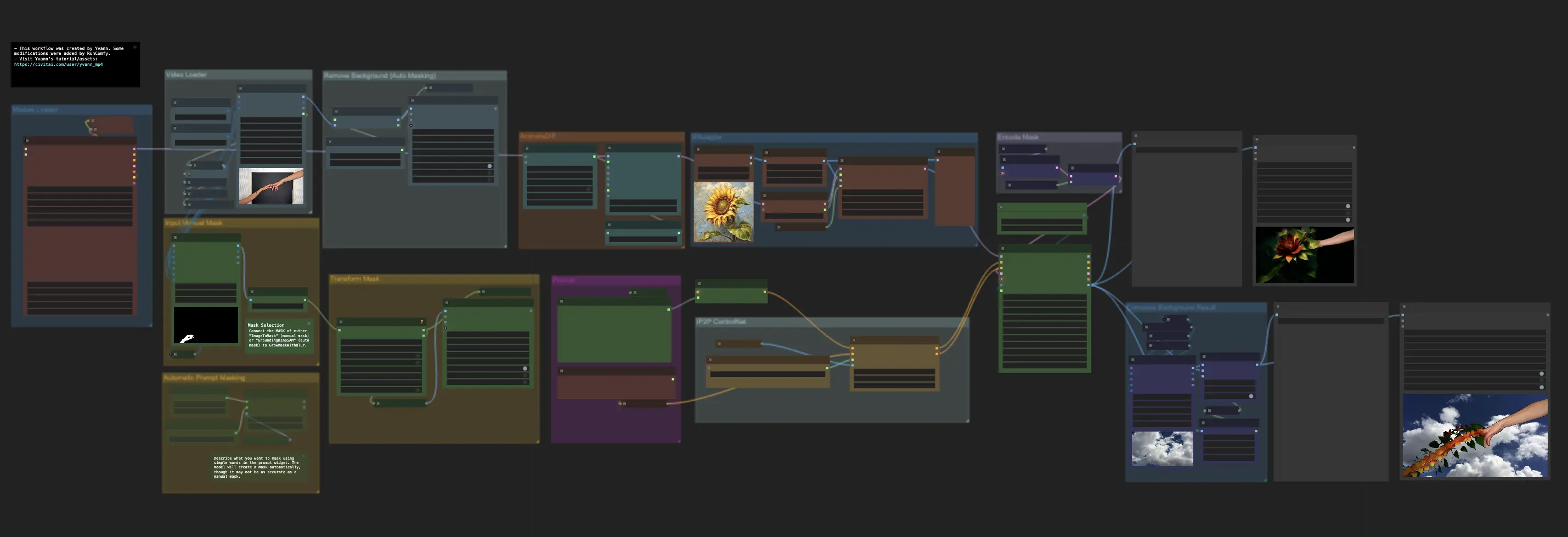
7 ComfyUI Custom Nodes That Should Be Built-In (And How to Get Them)
Essential ComfyUI custom nodes every user needs in 2025. Complete installation guide for WAS Node Suite, Impact Pack, IPAdapter Plus, and more...
ADetailer Single Character Focus - How to Target Specific Faces in Multi-Character Images 2025
Master ADetailer and FaceDetailer to focus on single characters in multi-person images. Complete guide to targeting specific faces with different prompts in ComfyUI.